
Wall.
Description
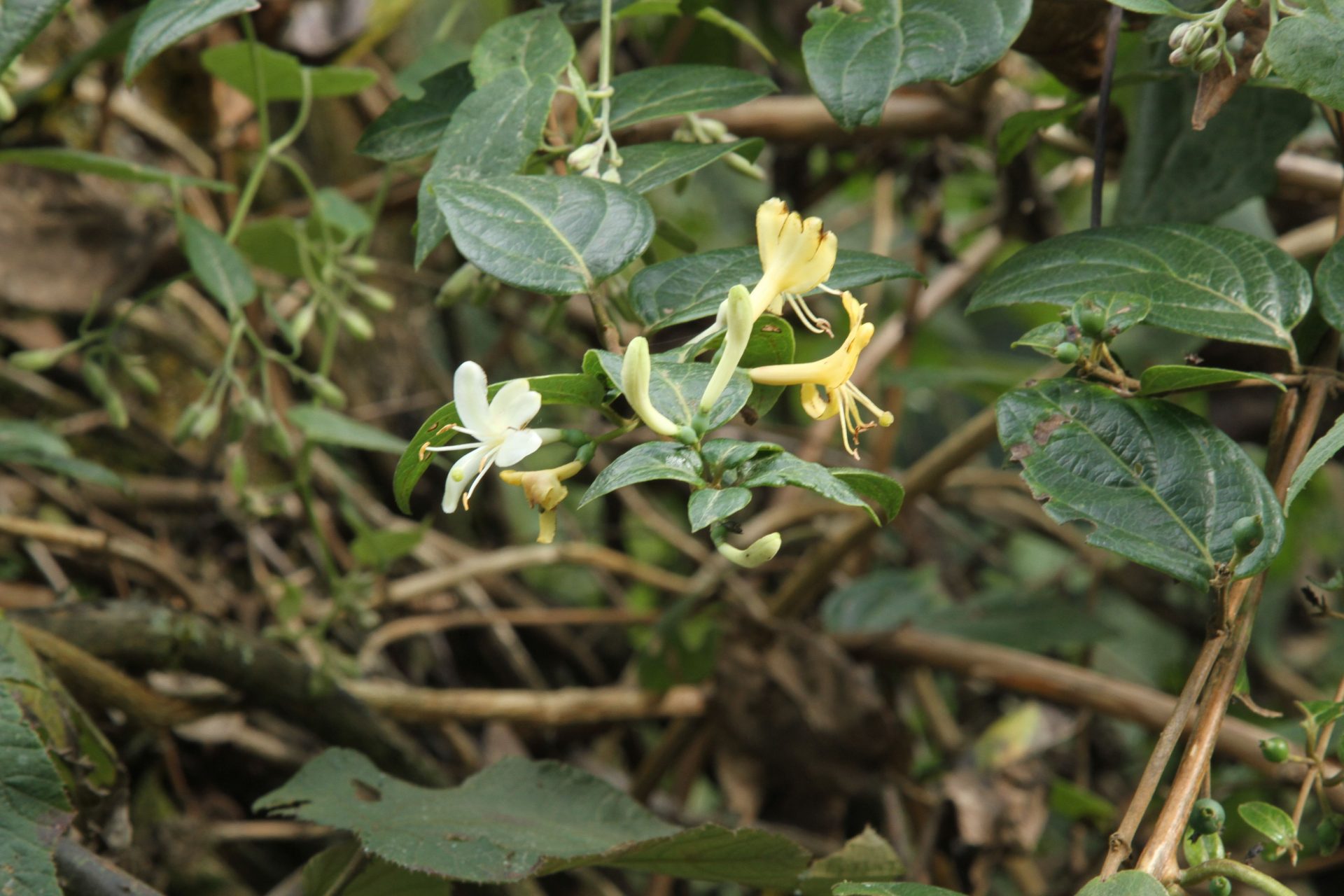
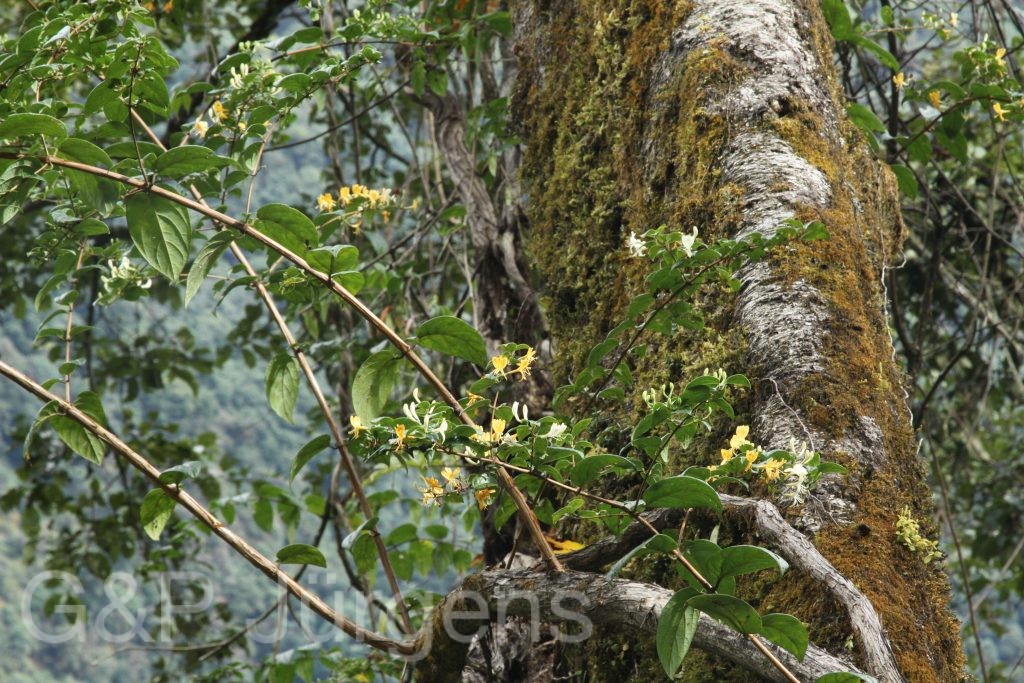
Lonicera glabrata is a Himalayan and Sino-Himalayan honeysuckle distributed from Nepal and India through Bhutan and Myanmar into south-western China; its c. 150 georeferenced records concentrate along the temperate forest belt of the eastern Himalaya. It grows in broadleaf and mixed forest, forest margins, thickets and shrubby slopes, generally between 1500 and 3000 m. The plant photographed at Gasa in northern Bhutan at 1950 m in October occupies the temperate forest zone, where its autumn fruiting follows the late-spring to early-summer flowering typical of the species.
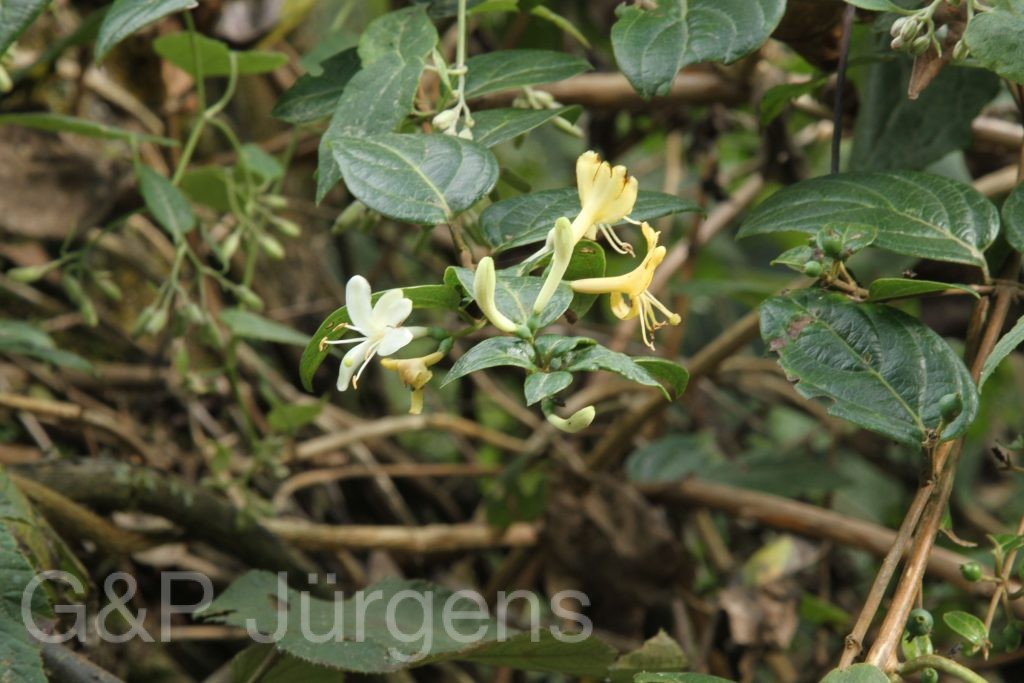
It is a glabrous deciduous shrub, sometimes scandent, 1.5-3 m tall, distinguished as the epithet "glabrata" implies by its smooth, hairless foliage. The leaves are opposite, ovate to lanceolate, acuminate, entire and rather thin in texture. The flowers are borne in axillary pairs on a slender common peduncle, each two-lipped and creamy-white to pale yellow, fragrant, with a slender tube. Paired bracteoles subtend the ovaries. The fruit is a paired berry, the two ripening red to purplish-black, the partly fused pairs offering a conspicuous food reward. The four to five stamens and slender style are exserted from the corolla mouth.
Described by Wallich (as Wall.), L. glabrata belongs to Lonicera section Coeloxylosteum of the Caprifoliaceae, a group of paired-flowered Himalayan shrubs. The tubular, nectar-rich flowers are pollinated by bees and long-tongued insects, while the colourful berries are dispersed by birds. The species is widespread within its range and locally common in forest understorey, with no significant conservation concern, though it is sensitive to deforestation of mid-elevation broadleaf woodland.
Author: Wall. · Sources: POWO (Kew), GBIF, Flora of Bhutan, Flora of China, Flora of Nepal, Rehder's monograph of Lonicera (Caprifoliaceae)