
(L.f.) Benth.
Description
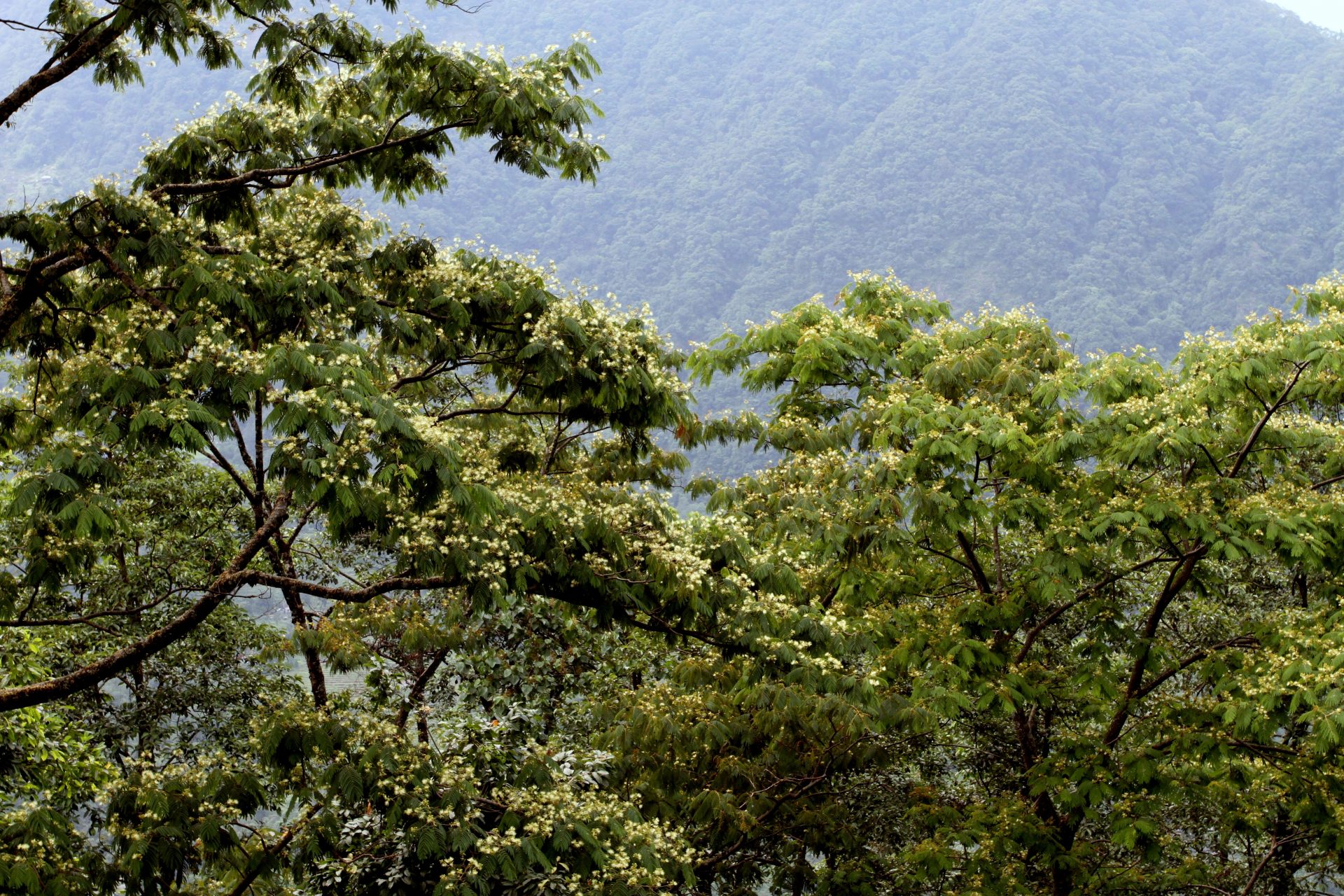
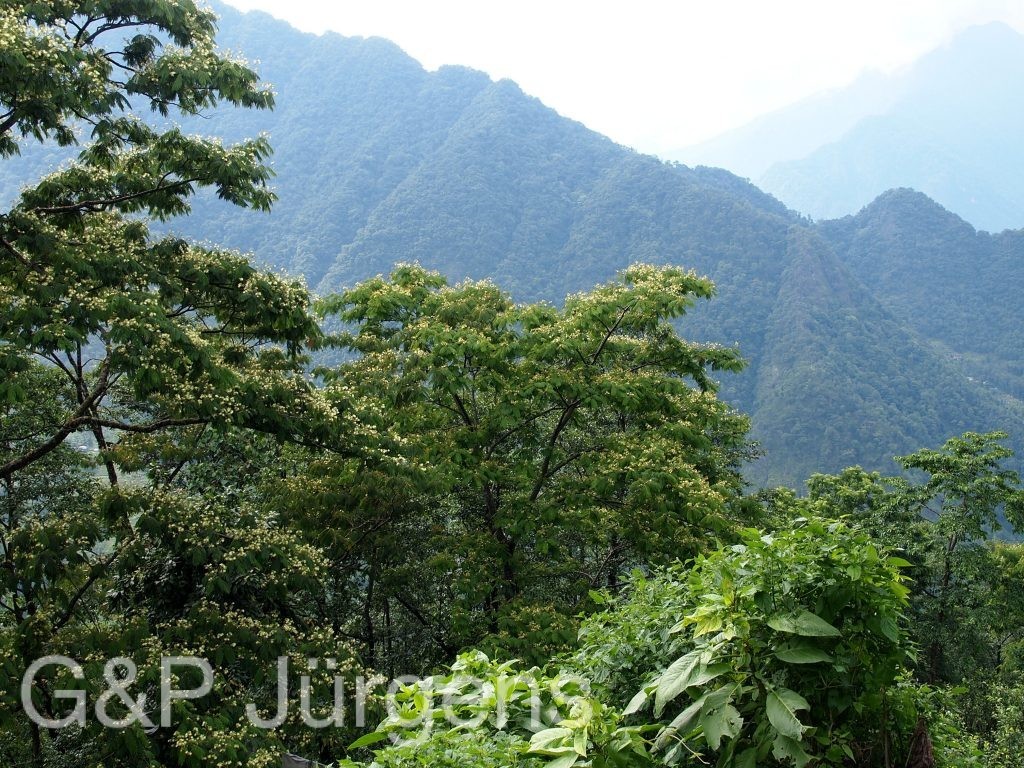
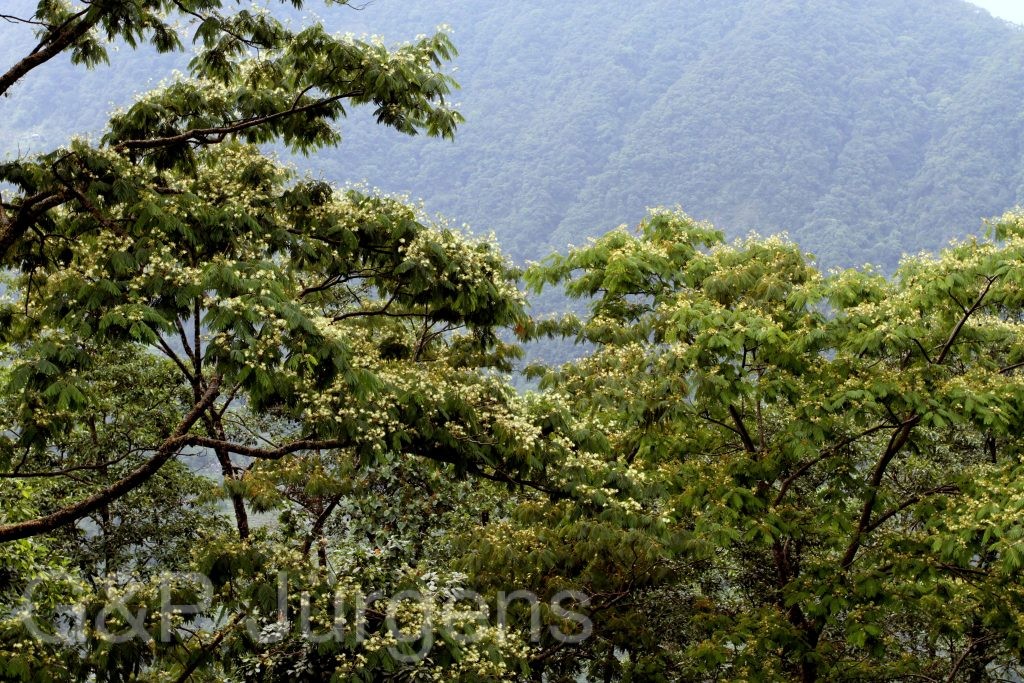
Albizia odoratissima is a deciduous tree of broadly tropical and subtropical distribution, ranging across the Indian subcontinent and continental Southeast Asia into southern China, with records from Nepal, Bangladesh, Myanmar, Thailand, Laos, Vietnam, Sri Lanka, Malaysia and Indonesia; it has been widely introduced elsewhere, including East Africa, Nigeria, Mozambique and the Americas, and is documented from over a thousand georeferenced collections. In the eastern Himalaya it ascends warm submontane forest, as in the Tista valley of Sikkim around 1800 m photographed in June, favouring moist deciduous and semi-evergreen forest, riverine slopes and forest margins.
The tree reaches 15-25 m, with a spreading crown, grey-brown bark and finely pubescent branchlets. The leaves are bipinnate, with 3-6 pairs of pinnae, each pinna bearing numerous small oblong-falcate leaflets oblique at the base; a gland sits on the petiole. The fragrant flowers are arranged in pedunculate globose heads grouped into terminal panicles, each with a small campanulate calyx, funnel-shaped corolla and numerous long, white to greenish-cream exserted stamens united below into a tube. The fruit is a flat, thin, oblong dehiscent legume, glabrous and reddish-brown.
A member of the mimosoid clade of Fabaceae, A. odoratissima was described as Mimosa odoratissima by the younger Linnaeus and transferred to Albizia by Bentham. It is valued as a nitrogen-fixing timber and fodder species and is widely planted for shade, agroforestry and reforestation, which accounts for its naturalised occurrences far beyond its native Asian range. Locally esteemed for its hard, durable wood, it remains common and is not regarded as threatened, though native populations are affected by selective logging and forest conversion.
Author: (L.f.) Benth. · Sources: POWO (Kew), GBIF, Flora of China, Flora of Bhutan, Flora of British India, Nielsen monograph of Asian Albizia (Mimosoideae)