
(L.) R.J.Wang
Description
Scleromitrion verticillatum is a widespread herb of tropical and subtropical Asia, with 629 GBIF occurrences spanning India, Nepal, China, Taiwan, Japan and a broad swathe of Southeast Asia from Myanmar and Vietnam through Malaysia, Indonesia and the Philippines. It grows as a weedy annual or short-lived perennial of open, disturbed and seasonally moist ground, including roadsides, grassy banks and waste places from the lowlands into the lower hills. The plant recorded at Chaana in West Bengal at 1650 m in May reflects its presence in the eastern Himalayan foothills, where it flowers with the onset of the warm, pre-monsoon season.
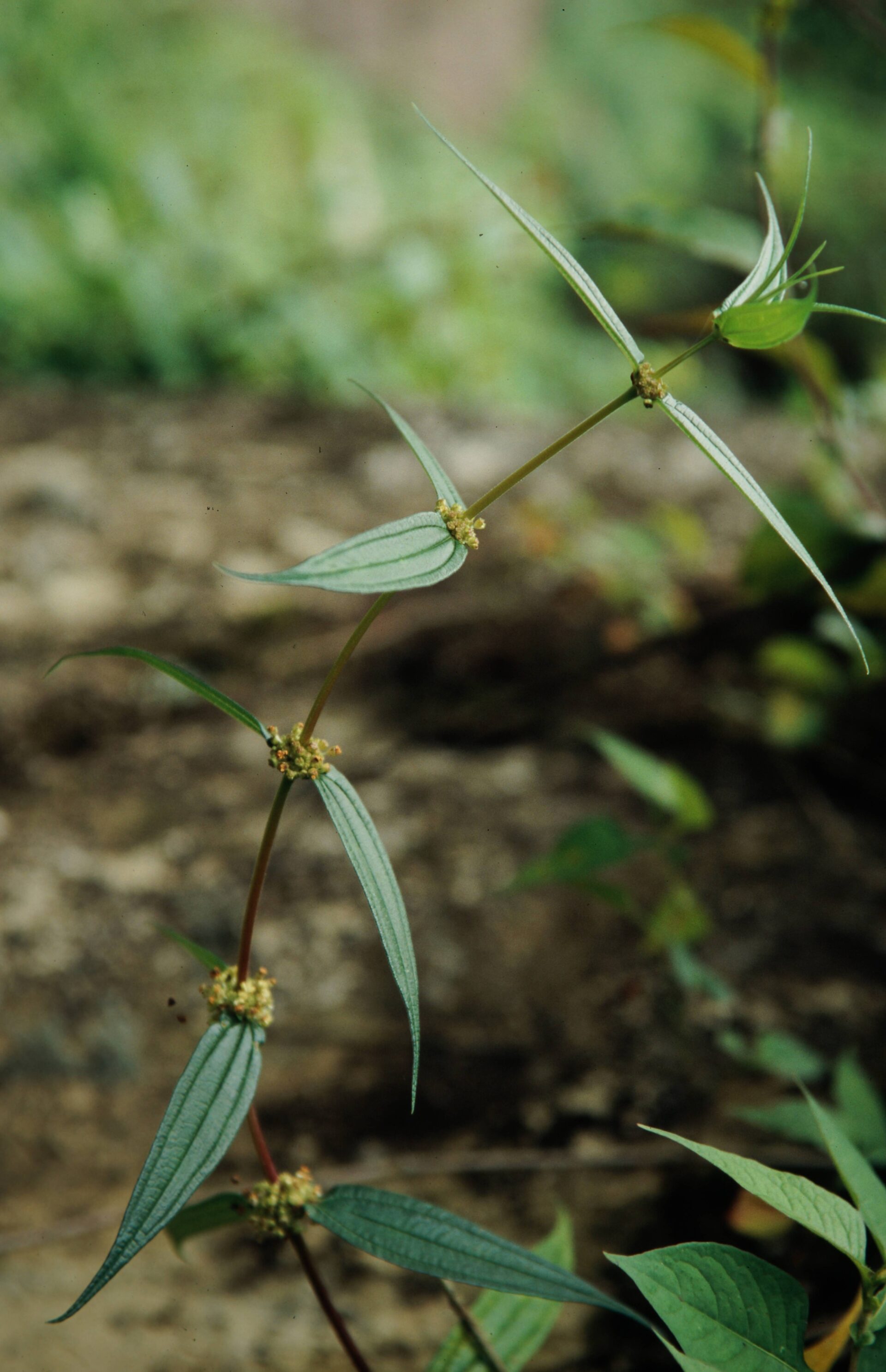
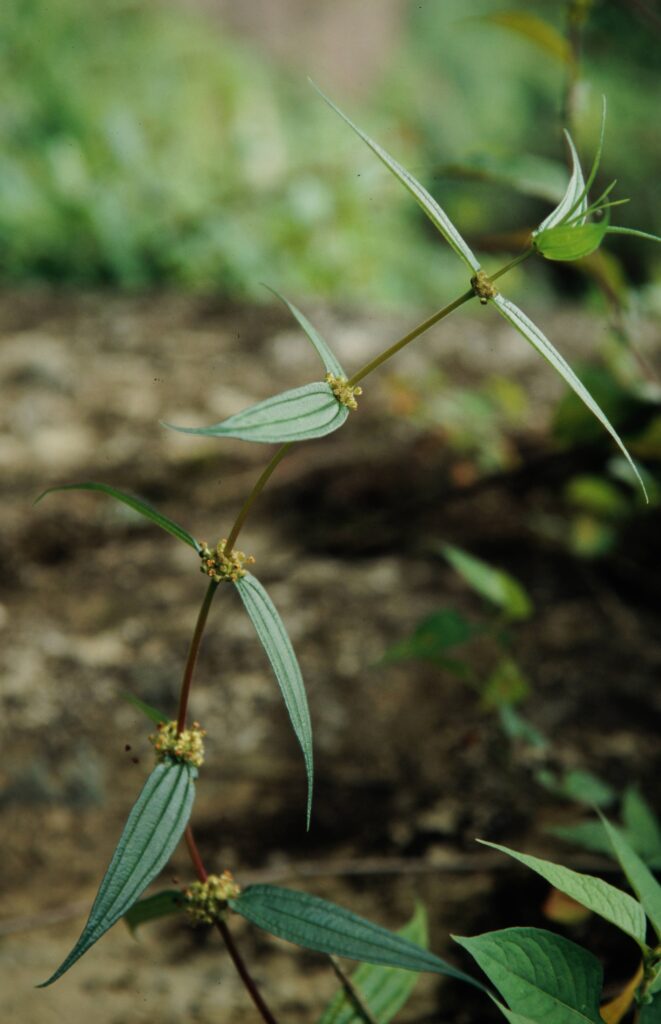
The species is an erect to ascending herb with quadrangular, often scabrid stems that may be roughened on the angles. The leaves are opposite, sessile or nearly so, linear-lanceolate to lanceolate, with entire, frequently scabrid margins and interpetiolar stipules bearing setae characteristic of the tribe Spermacoceae. The small white flowers are borne in dense axillary clusters or verticillate glomerules, each with a four-lobed calyx, a tubular four-lobed corolla, four epipetalous stamens and a bifid style. The fruit is a small, subglobose to ellipsoid capsule that dehidces septicidally to release numerous minute, angular seeds.
Scleromitrion was segregated from the broadly circumscribed Hedyotis-Oldenlandia complex on the basis of molecular and capsular characters, and S. verticillatum was formerly placed in Hedyotis and Oldenlandia. The genus belongs to the tribe Spermacoceae within Rubioideae. As a ruderal coloniser of open habitats, the species is ecologically successful and locally common, posing no conservation concern across its extensive range.
Author: (L.) R.J.Wang · Sources: POWO (Kew), GBIF, Flora of China Vol. 19, Flora of Bhutan Vol. 2, Flora of Nepal, Flora of Pakistan, Wang's revision of Scleromitrion and Spermacoceae