
Sweet
Description
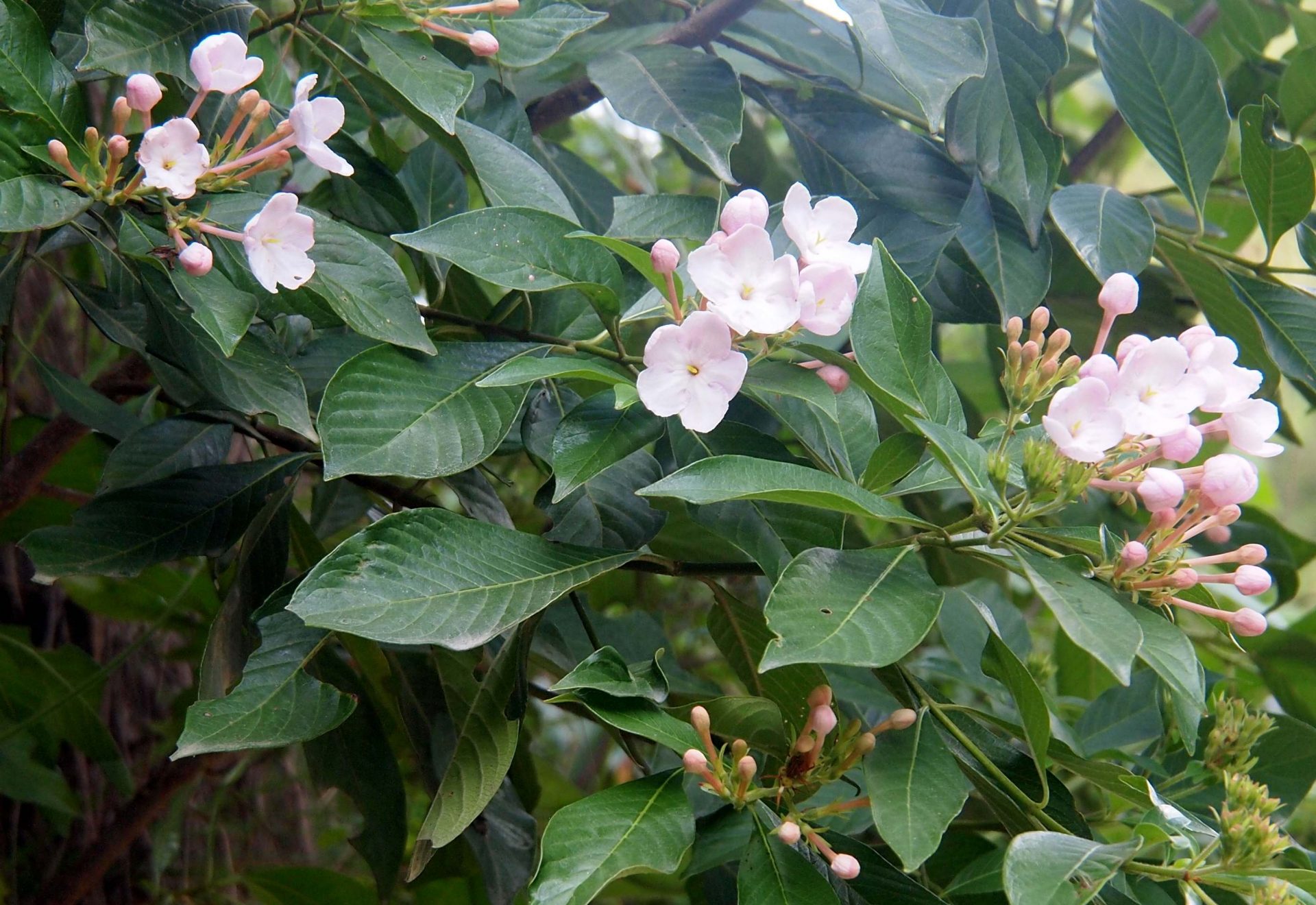
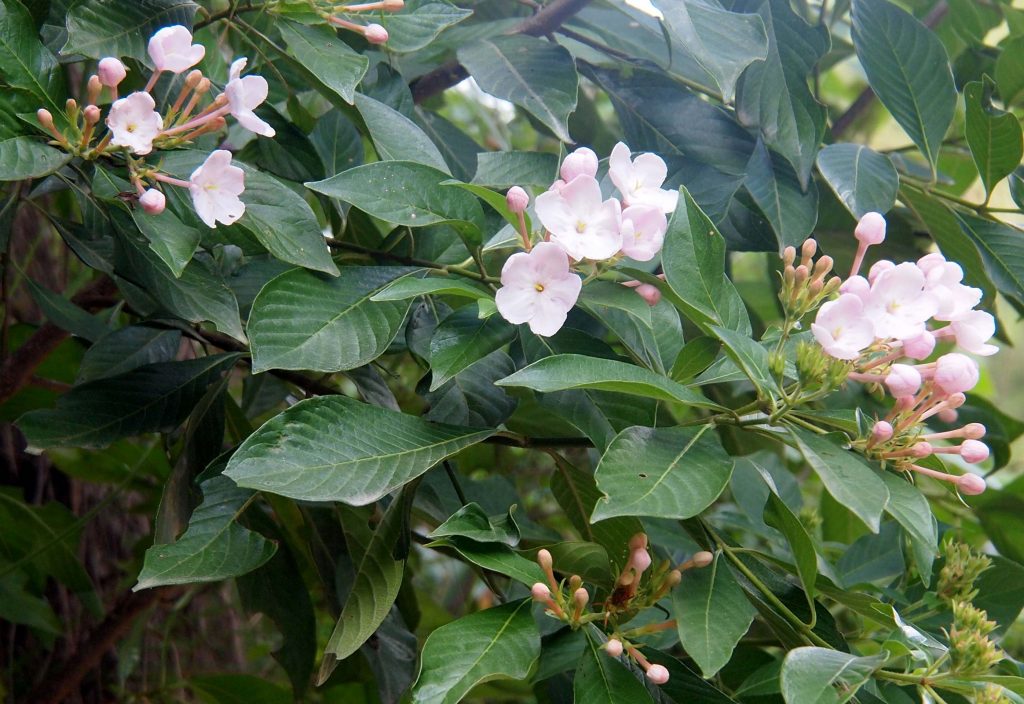
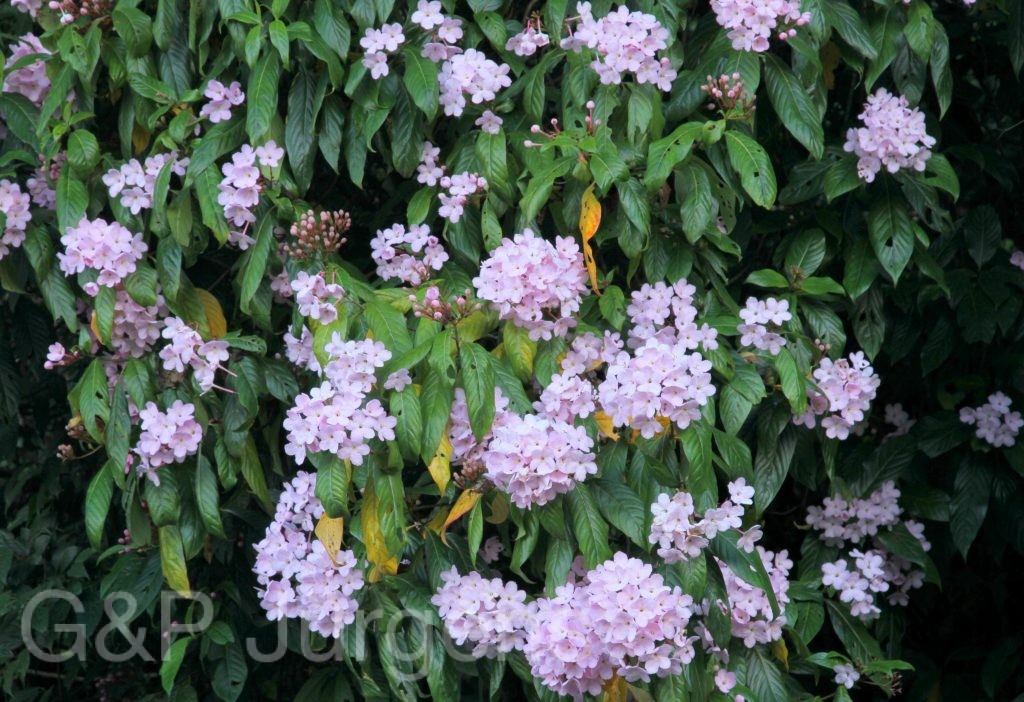
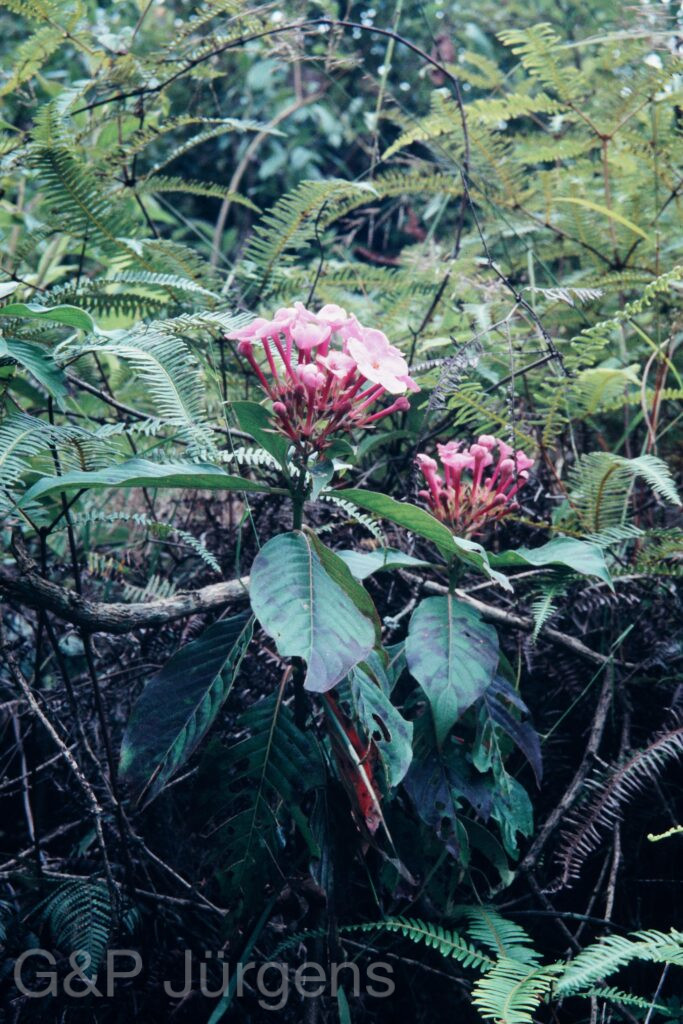
Luculia gratissima is a Himalayan and southwest Chinese shrub or small tree ranging from Nepal through Bhutan and northeast India into southern China, Myanmar, Thailand and Vietnam. GBIF records some 404 occurrences, including many cultivated specimens in temperate and subtropical regions worldwide. It inhabits subtropical to warm-temperate forest, forest margins, open hillsides and stream banks, generally between about 1000 and 2500 m. The photographed plants come from Bhutan at Tserang (1300 m) and Sandrup (1500 m) in September and from Tibling in Nepal at about 2200 m in October, the autumn flowering period typical of this fragrant species.
The species is an erect, branched shrub or small tree with terete, glabrescent branchlets. The leaves are opposite, large, elliptic to ovate-lanceolate, acuminate, with prominent pinnate venation and interpetiolar stipules. The flowers are borne in large terminal corymbose cymes and are showy and sweetly scented; each has a slender, elongate corolla tube opening into five spreading pink lobes, with small paired scales at the throat and exserted anthers. The fruit is an obovoid, ribbed, two-valved capsule that splits to release numerous small winged seeds adapted to wind dispersal.
Luculia gratissima Sweet is prized horticulturally for its fragrant pink autumn flowers and is widely grown in mild and subtropical gardens, which accounts for its many extralimital GBIF records. Within its native Himalayan and Indo-Chinese range it is widespread and not considered threatened. The genus Luculia, with its long-tubed scented flowers and winged capsular seeds, is of phylogenetic interest as an early-diverging lineage within the Rubiaceae.
Author: Sweet · Sources: POWO (Kew), GBIF, Flora of Bhutan, Flora of China, taxonomic revisions of Luculia (Rubiaceae)