
Prain
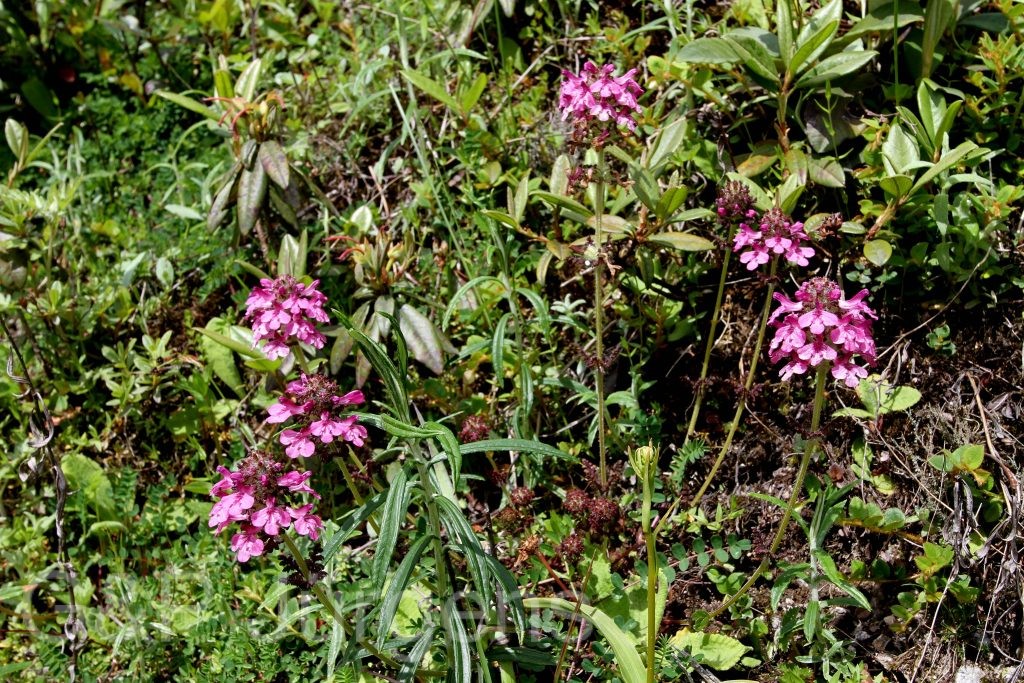
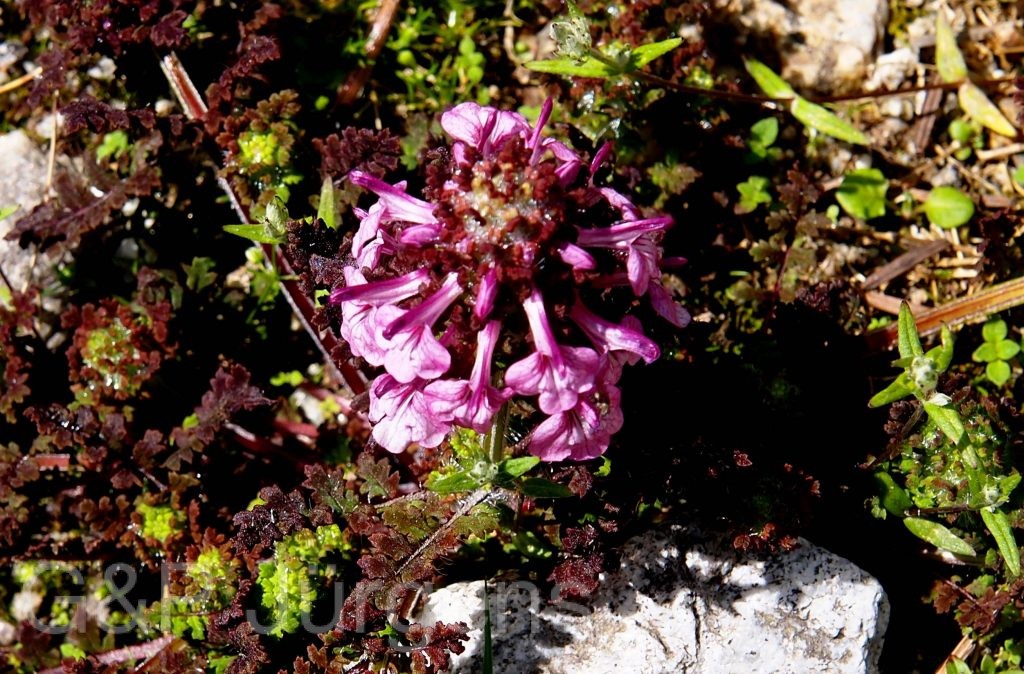
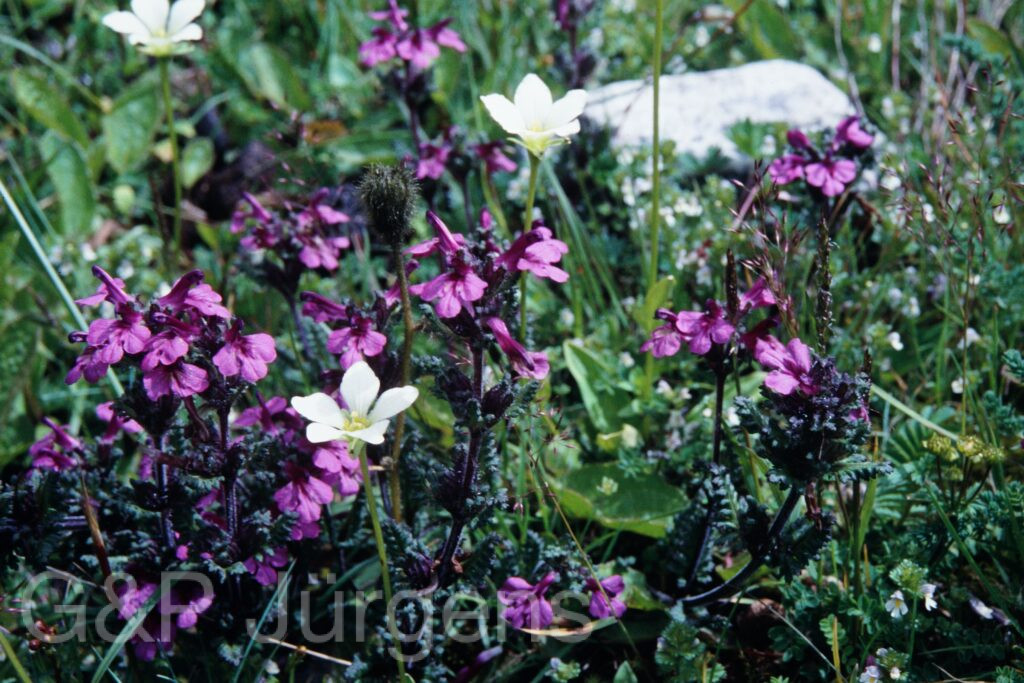
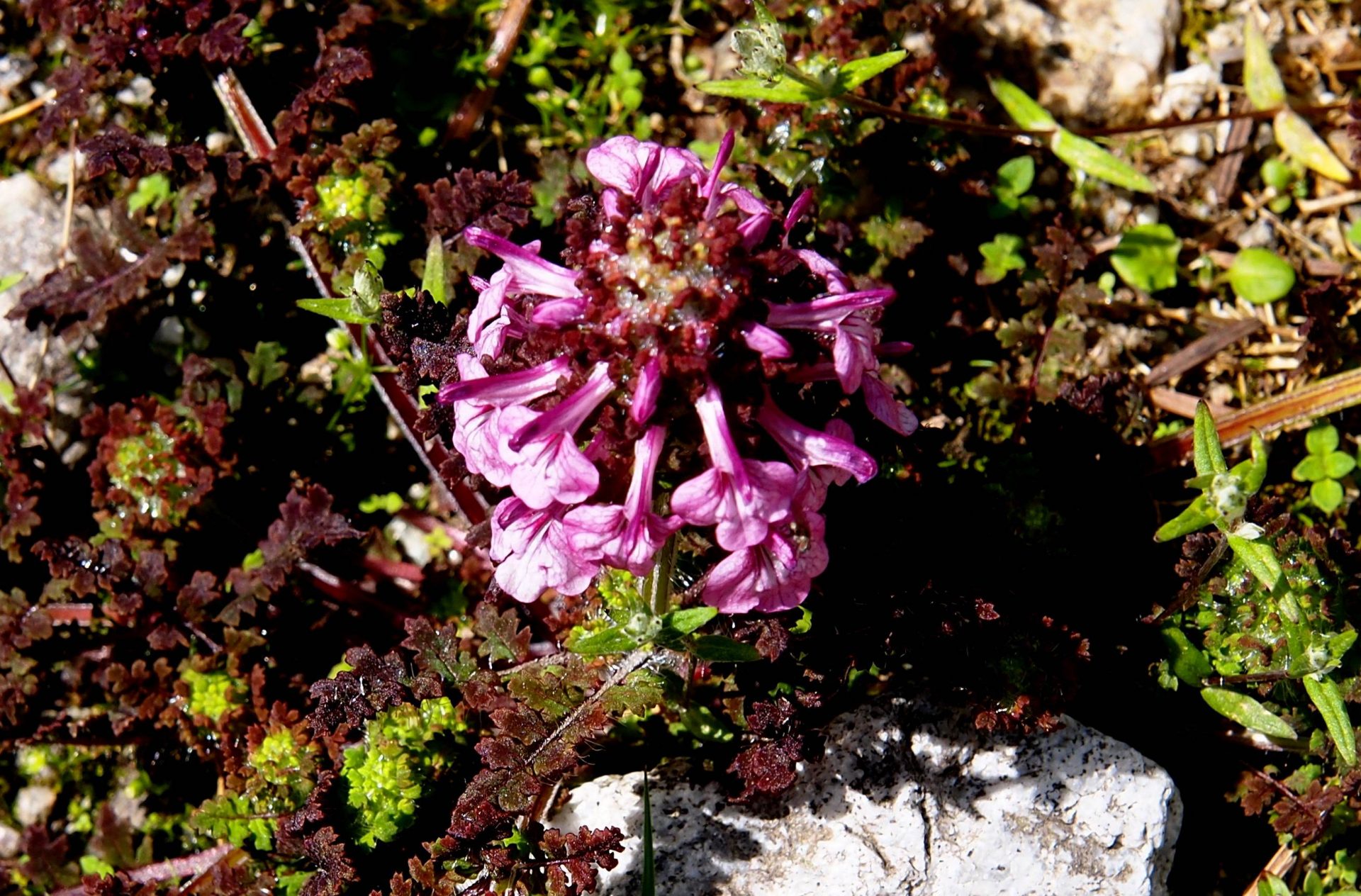
Description
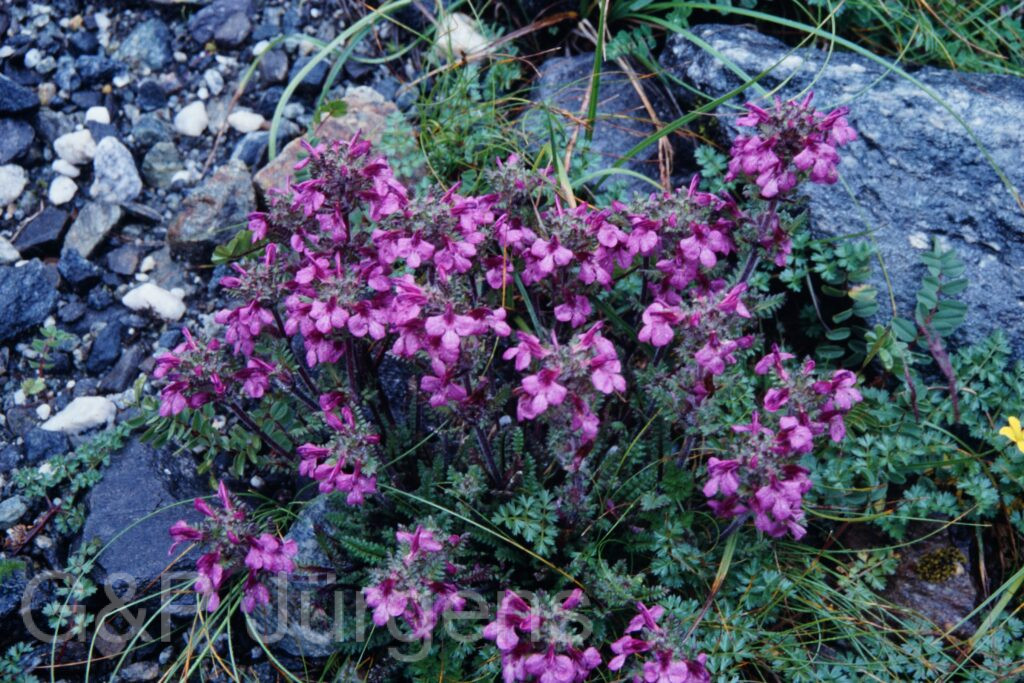
Pedicularis diffusa is a hemiparasitic alpine herb of the eastern Himalaya and adjacent Tibetan region, recorded from China, Bhutan, India, Nepal, Myanmar and Mongolia, with about 92 occurrences in GBIF. It inhabits subalpine and alpine meadows, open grassy slopes, scrub and the margins of forest, typically between about 3000 and 4500 m. The photographed populations come from Sikkim, at Lachung (3000 m, June) and at the high alpine site of Dzongri (4100-4200 m, August), spanning the species' altitudinal range and flowering from early summer into the late monsoon at the higher stations.
The plant forms loose clumps from a fibrous or somewhat thickened rootstock, with ascending to diffusely spreading stems, the habit reflected in the epithet diffusa. The leaves are pinnately divided into oblong, toothed segments and are arranged along the stems as well as basally. The flowers are borne in lax, leafy, often elongate and interrupted racemes; the corolla is pink to purplish-red, two-lipped, with a galea (hooded upper lip) and a broad three-lobed lower lip, the galea typically beaked or toothed at its apex. The fruit is an oblique, laterally compressed capsule containing few seeds.
Like all Pedicularis, the species is a root hemiparasite, photosynthetic but tapping neighbouring plants via haustoria for water and minerals, an adaptation well suited to nutrient-poor alpine turf. The genus is extraordinarily diverse in the Sino-Himalayan mountains, and corolla architecture, particularly the form of the galea and beak, underpins species delimitation. Its tubular two-lipped flowers are adapted to bumblebee pollination. Restricted alpine specialists of this kind are potentially sensitive to climate warming and grazing pressure on high pastures.
Author: Prain · Sources: POWO (Kew), GBIF, Flora of China, Flora of Bhutan, Pedicularis monograph (Tsoong)